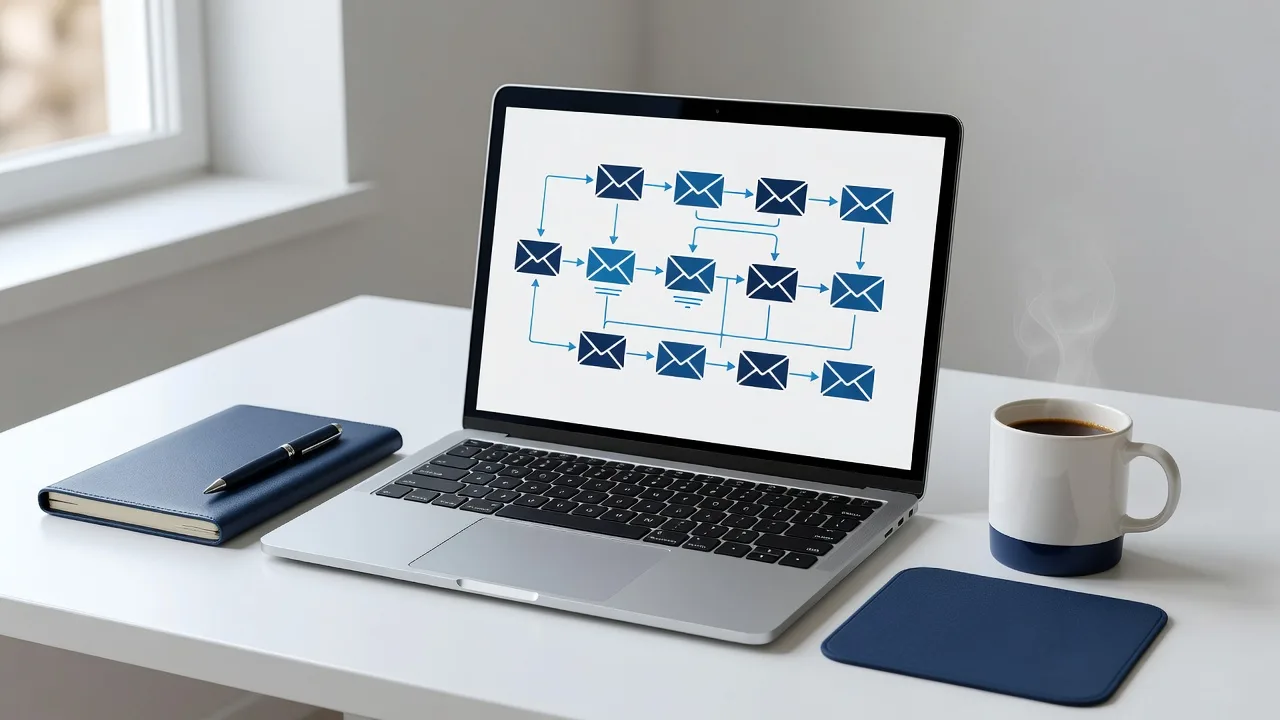
Every dollar you spend on ads buys you one visit. Email is different. Once someone is on your list, you can reach them again and again for next to nothing, and that maths is exactly why industry studies from Klaviyo and the DMA consistently put email ROI among the highest of any marketing channel.
Yet most Australian ecommerce stores we audit are barely using it. They send the occasional sale announcement, maybe a newsletter when they remember, and that's it. The real money in email marketing for ecommerce isn't in campaigns you send manually. It's in flows: automated sequences that trigger based on what a customer does, run 24/7, and keep earning long after you set them up.
For mature ecommerce brands, flows plus campaigns commonly drive a meaningful share of total store revenue. That's not a typo. A store doing solid traffic with no flows is leaving a serious amount of money on the table every single month.
Here are the five flows every store needs, in the order we'd build them.
Flow 1: The Welcome Series
The welcome flow triggers when someone joins your list, usually through a pop-up offering a discount or free shipping on their first order. These are the warmest non-customers you'll ever have. They just told you they're interested. Across the industry, welcome emails reliably earn some of the highest open rates of any email a store sends.
A good welcome series is three to five emails. The first delivers the offer immediately and introduces the brand. The second tells your story: who you are, why you started, what makes your products different. The third handles objections with social proof, reviews and best sellers. Later emails remind them the offer is expiring.
What it's worth: for most stores this is the single highest revenue-per-recipient flow you'll own, because it catches people at peak interest. If you only build one flow this month, build this one.
Flow 2: Abandoned Cart
Baymard Institute's research puts average cart abandonment around 70%. Seven out of ten people who add something to their cart walk away without paying. An abandoned cart email flow is how you bring a chunk of them back.
The structure is simple. Email one goes out within the first hour or two: "you left something behind", with a photo of the exact product and a link straight back to their cart. Email two lands the next day and handles objections, shipping costs, returns policy, reviews. Email three, a day or two later, can introduce an incentive if your margins allow it.
These emails convert far better than standard campaigns because the buying intent is already there. Someone who carted a product was minutes from buying. We've covered the full playbook in our guide to abandoned cart recovery, but the short version is: if you sell online and you don't have this flow, you're losing recoverable sales every day.
Check Your Own Numbers
Shopify shows abandoned checkouts under Orders in your admin. Open it and look at the last 30 days. That list is money sitting on the table, and most of those shoppers never hear from the store again.
Flow 3: Browse Abandonment
One step earlier in the funnel sits browse abandonment. This flow triggers when an identified subscriber views a product but never adds it to their cart. The intent is softer than a carted product, so the email should be softer too.
One or two emails is plenty. "Still thinking about it?" with the product they viewed, a few related items, and maybe a customer review. No discount needed. You're just keeping the product in front of them while it's still fresh.
What it's worth: per email, less than abandoned cart. But because far more people browse than cart, the volume is much larger. For stores with decent traffic, browse abandonment quietly becomes one of the biggest flows by total revenue. It pairs especially well with Meta ads, because paid traffic fills the top of the funnel and this flow catches the people who looked but didn't act.
Flow 4: Post-Purchase
Most stores go silent after the sale, which is backwards. A customer who just bought is the most likely person to buy again, and acquiring a new customer costs far more than retaining an existing one. The post-purchase flow is how you turn one-time buyers into repeat customers.
Reassure
A thank-you email that confirms the order, sets delivery expectations and shows there's a real business behind the checkout.
Educate
How to use, care for or get the most out of the product. This single email cuts refunds and support tickets.
Ask and Cross-Sell
Once the product has arrived, ask for a review, then recommend the natural next purchase.
What it's worth: this flow doesn't just generate direct revenue, it builds the review base and repeat-purchase habit that make every other channel cheaper. Stores with strong post-purchase flows grow on the back of customers they already paid to acquire.
Flow 5: Win-Back
Every list goes cold over time. Customers who bought once drift away, and subscribers stop opening. The win-back flow targets people who haven't purchased or engaged in a set window, often somewhere between 60 and 180 days depending on how often your product gets repurchased.
The angle is simple honesty: "we miss you", what's new since they last shopped, and usually your strongest offer. If they still don't respond after a couple of attempts, suppress them from regular sends. That sounds counterintuitive, but mailing dead addresses hurts your deliverability and drags down results for the whole list.
What it's worth: a recovered customer costs you almost nothing compared to a new one from ads. Even a modest reactivation rate on a list of past buyers adds up, and the deliverability benefit of cleaning out genuinely cold contacts pays off across every flow above.
How Flows Compound
Here's the part most store owners miss: these five flows don't just add up, they multiply. The welcome series turns visitors into first-time buyers. Abandoned cart and browse abandonment rescue the ones who hesitate. Post-purchase turns those first-time buyers into repeat customers and reviewers. Win-back catches anyone who slips through. Every flow feeds the next.
And unlike ads, flows don't reset to zero each month. A campaign email earns once. A flow you built in June is still earning in December, with zero extra spend. As your list grows, the same flows produce more revenue without you touching them. That's why we treat email flows as infrastructure, the same way we treat business automations: build once, benefit forever.
This compounding is also what makes paid traffic sustainable. When a healthy share of revenue comes from email, you can afford to pay more per click than competitors who rely on the first visit converting. The stores that win on ads are usually the ones winning on email behind the scenes.
Getting Started
If you're on Shopify, Klaviyo is the platform we recommend and build on for almost every client. It plugs straight into your store data, tracks who viewed and carted what, and lets you build all five flows with proper triggers and timing.
Build them in this order: welcome, abandoned cart, post-purchase, browse abandonment, win-back. That sequence prioritises the highest intent first. Don't aim for perfect on day one. A simple three-email welcome series live this week beats a ten-email masterpiece that never ships. Once the flows are running, review them monthly and improve the weakest email each time. For a wider view of how this fits with the rest of your stack, our piece on ecommerce systems covers where flows sit in the bigger picture.
If you'd rather have it done properly the first time, this is exactly what we do at MakeItScale. We're a Gold Coast team, we work with Australian ecommerce stores, and we build email flows that pay for themselves quickly. Get in touch or book a time to call and we'll take a look at your store together.