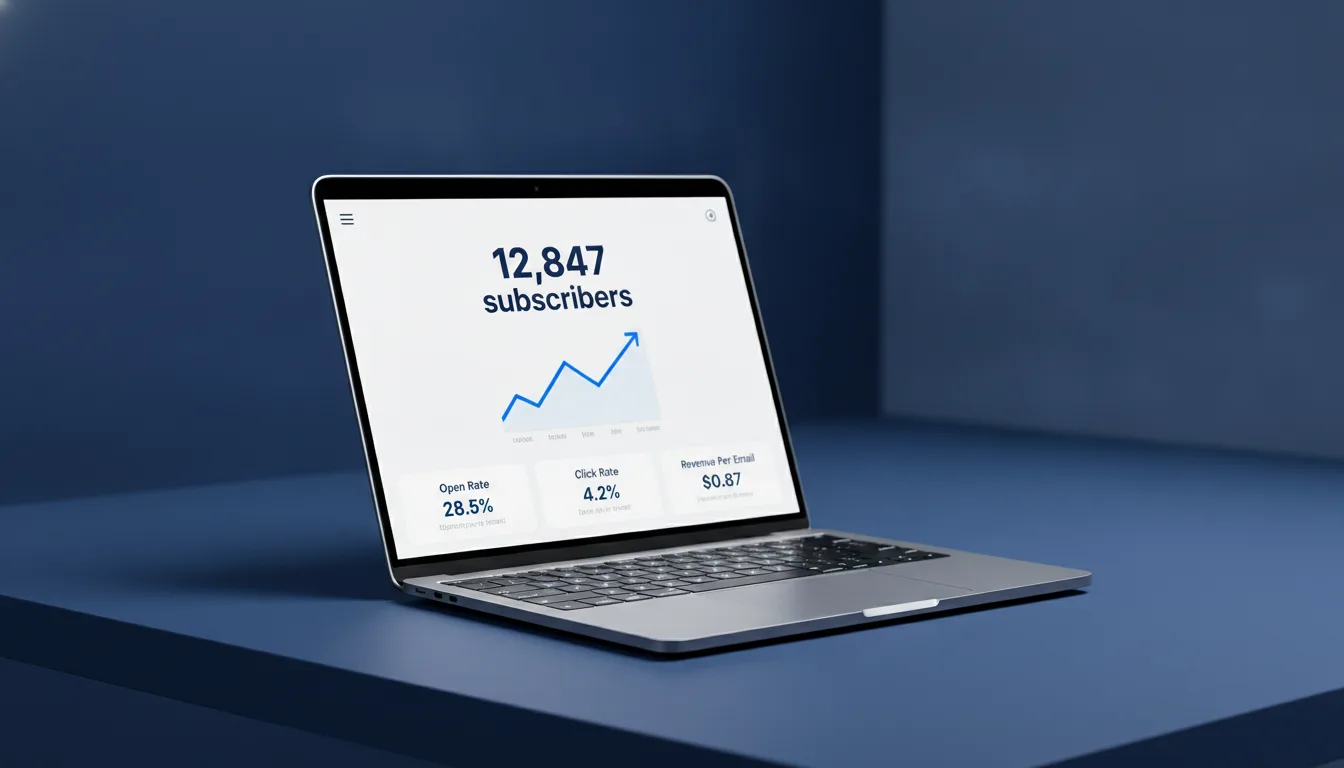
Why Your List Is the Only Audience You Own
Your Instagram followers belong to Meta. Your TikTok audience belongs to TikTok. Your Google rankings belong to Google. Any of them can change an algorithm tomorrow and cut your reach in half, and you'll get no warning and no appeal. Your email list is the one audience nobody can take off you.
That's not just a security blanket, it's economics. Industry benchmarking from platforms like Klaviyo consistently shows email driving a meaningful slice of total ecommerce revenue for stores that do it properly, often a quarter or more, at a fraction of the cost of paid traffic. You pay once to acquire the subscriber, then you can reach them again and again for next to nothing.
It also fixes the most expensive leak in your store. Most visitors don't buy on their first visit, that's normal across every ecommerce category. Without a list, those people are gone, and you pay full price for ads to win them back. With a list, that first visit isn't a dead end, it's the start of a relationship you control.
So treat list growth as a core metric of your store, not an afterthought. Every strategy below is about one thing: converting more of the traffic you already get into an audience you actually own.
The Pop-Up Done Properly: Offer, Timing, Design
Yes, pop-ups annoy people, and yes, they work. They remain the single highest-volume list-building tool for almost every store. The difference between an annoying pop-up and an effective one comes down to three decisions.
The Offer
"Subscribe to our newsletter" converts almost nobody. Give something with real value: a first-order discount, free shipping, or early access to new drops. Make the trade worth their email address.
The Timing
Don't fire it the instant the page loads. Let people see what you sell first. Trigger on a short delay, meaningful scroll depth, or exit intent on desktop. The pop-up should arrive after interest exists, not before.
The Design
On brand, one field (email, maybe a name), one clear button, and an obvious close. On mobile it has to be easy to dismiss, both for the customer and because Google penalises intrusive interstitials on mobile.
One more detail that pays for itself: if you offer a discount, deliver the code by email rather than showing it on screen. It confirms the address is real, gets your sender into their inbox immediately, and starts the welcome flow from a position of goodwill.
Beyond the Pop-Up: Checkout, Post-Purchase, In Person
If the pop-up is your only collection point, you're leaving subscribers everywhere. The best lists are built from several quiet collection points working at once.
Start with checkout. Shopify lets you show an email marketing opt-in right in the checkout flow, and the people ticking that box are your hottest possible subscribers, they're literally buying from you at that moment. Make sure it's switched on and that the label actually says what they'll get, like "Email me exclusive offers and new arrivals".
Then post-purchase. The order confirmation and shipping emails get opened more than anything else you'll ever send, so use that attention. A simple line inviting customers to subscribe for early access, or a card in the parcel with a QR code and a reason to scan it, turns buyers into subscribers even when they skipped the checkout box.
And don't forget the physical world. If you do markets, pop-ups, or have a retail counter, a tablet or QR code with a simple "join the list, get X" converts surprisingly well because the person asking is standing right there. Australian stores that sell at weekend markets often build their first thousand subscribers this way before the website catches up.
What to Send So People Stay
Collecting the email is the easy half. Keeping the subscriber is where most stores fail, because they go silent for six weeks and then reappear with a SALE SALE SALE email. That pattern trains people to unsubscribe or, worse, to mark you as spam, which hurts your deliverability to everyone else.
The fix is a rhythm people actually want in their inbox. Lead with the welcome flow: a short automated series that delivers the offer, tells your story, shows your best sellers, and handles the questions people ask before they buy. This is the highest-revenue automation in almost every store, and we've broken the whole sequence down in our guide to email flows for ecommerce.
Beyond automations, send regular campaigns that mix value with selling. New arrivals, restocks, how-to content, behind-the-scenes of the business, customer photos and reviews. A good rule: if every email you've sent this month could have the subject line "BUY NOW", the mix is wrong. People stay on lists that feel like a brand they like talking to them, not a billboard that found their inbox.
How Often Should You Send?
For most stores, once a week is the floor and a few times a week is fine if the content holds up. Consistency beats volume. A list that hears from you every Thursday will outperform one that gets blasted randomly, because your sender reputation and your subscribers' habits both build on the rhythm.
Segmenting From Day One
Most stores treat segmentation as an advanced tactic for later. That's backwards. The cheapest time to segment is at the point of collection, because the data captures itself.
Start simple. Tag subscribers by where they joined: pop-up, checkout, in person, a giveaway. Tag buyers separately from non-buyers, your email platform does this automatically once it's connected to your store. If your products split naturally, like mens and womens, or beginner and pro, ask one question at signup or watch what they click and tag accordingly.
Even two or three basic segments change what's possible. Non-buyers get the first-order offer, buyers never see it. VIPs get early access before the public launch. People who bought a specific category hear about the matching new release first. The message lands because it's relevant, and relevant emails get opened, clicked, and bought from at rates a one-size-blast never reaches.
The other reason to start now: you can't retrofit data you never collected. A 10,000-person list with no tags is a guessing game. A 2,000-person list with clean segments is a revenue machine.
Common List-Building Mistakes
A few traps we see Australian store owners fall into again and again:
- Buying lists. Never. Purchased contacts never consented to hear from you, they tank your deliverability, and sending to them breaches the Spam Act in Australia, which requires consent and a working unsubscribe. There is no shortcut here.
- Giveaway-only growth. A "win a $500 voucher" comp fills your list with prize hunters who never buy and unsubscribe in droves afterwards. Giveaways can work, but make the prize your own product so entrants are at least your actual market.
- Collecting and going silent. A subscriber who hears nothing for two months has forgotten you. When you finally email, they report it as spam. Set up the welcome flow before you push hard on collection.
- Discounting too hard at signup. If 25% off is the entry offer, you've trained every future customer to wait for a code. A modest offer, free shipping, or non-discount value like early access keeps your margin intact.
- No clean unsubscribe. Hiding the unsubscribe link doesn't keep subscribers, it creates spam complaints. Let people leave easily and your list stays healthy for the ones who stay.
Build the collection points, set up the flows, segment from the start, and send consistently. Do that and your list quietly becomes the most profitable channel your store has, the one no platform can take away or charge you more for.
If you'd rather have it built properly the first time, the pop-up, the flows, the segments, and the campaign rhythm, that's exactly what our email marketing service does for Australian stores. Get in touch or book a time to call and we'll look at what your list could be doing for your revenue.